A hand trap is a card you can activate straight from your hand to disrupt your opponent’s play. Most are monsters with Quick Effects, and you use them on your opponent’s turn, often while they’re trying to set up. “Hand trap” is a player term, not official game text, but you’ll hear it at every table.
Why they matter
Normal Traps have to be Set on the field first and can’t be used the turn you Set them. Hand traps skip that: they work straight from your hand. That makes them the main way to interact with an opponent who goes first, before you’ve had a turn to Set anything.
Monster Quick Effects are Spell Speed 2, so hand traps can respond to your opponent’s Spells, Ignition Effects and other Quick Effects in a chain.
A short history
The first card that worked like this was Kuriboh, back in 2002. Cards like Gorz the Emissary of Darkness and Maxx “C” later made hand traps a regular part of competitive play, and as decks came to rely on searching and Special Summoning, cards built to stop exactly those things took over. Maxx “C” is still Forbidden.
The most popular hand traps right now
These are among the most-viewed cards on YGOPRODeck this week. Each line is what the card stops, in plain English.
| Card | What it does |
|---|---|
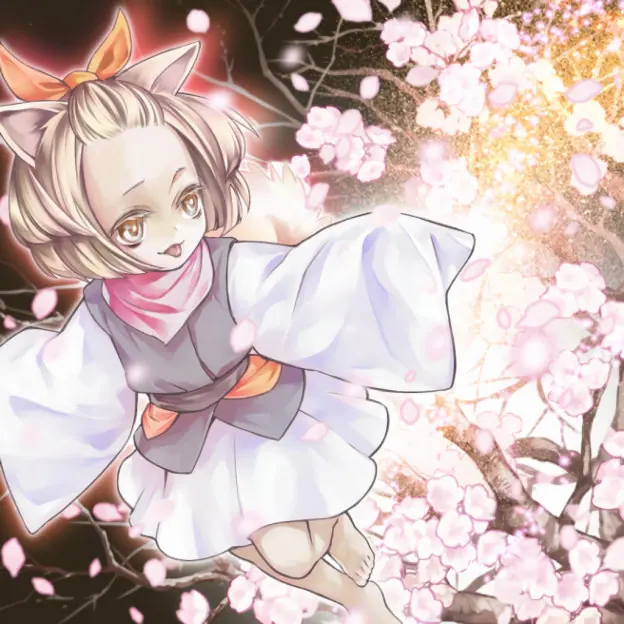
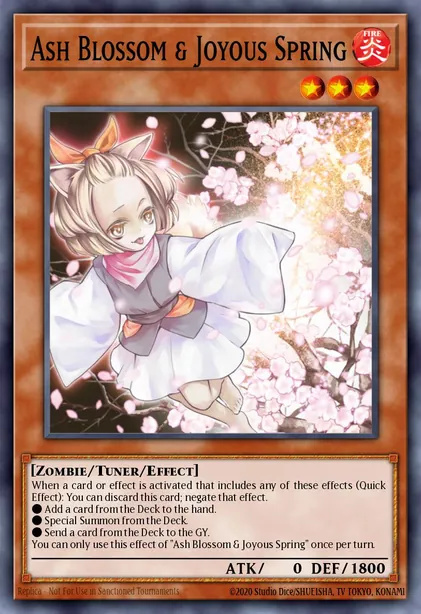
 Ash Blossom & Joyous Spring Ash Blossom & Joyous Spring |
Discard it to negate an effect that would add a card from the Deck to the hand, Special Summon from the Deck, or send a card from the Deck to the GY. Once per turn. |
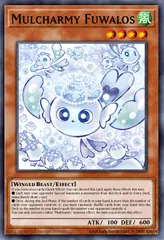 Mulcharmy Fuwalos Mulcharmy Fuwalos |
If you control no cards: discard it, then draw 1 card each time your opponent Special Summons from the Deck or Extra Deck this turn. You may have to shuffle extra cards back at the End Phase. |
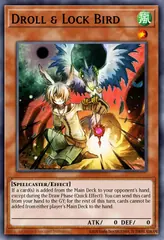 Droll & Lock Bird Droll & Lock Bird |
After your opponent adds a card from their Main Deck to their hand outside the Draw Phase, send it to the GY: for the rest of the turn, neither player can add cards from the Main Deck to the hand. Semi-Limited. |
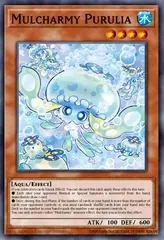 Mulcharmy Purulia Mulcharmy Purulia |
Like Fuwalos, but you draw when your opponent Normal or Special Summons a monster from the hand. |
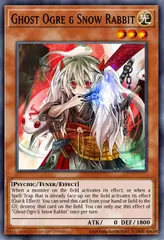 Ghost Ogre & Snow Rabbit Ghost Ogre & Snow Rabbit |
When a monster on the field, or a face-up Spell/Trap, activates its effect: send this card to the GY to destroy that card. Once per turn. |
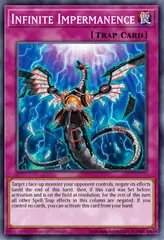 Infinite Impermanence Infinite Impermanence |
A Trap that negates a face-up monster’s effects for the turn. Can be activated from your hand if you control no cards. |
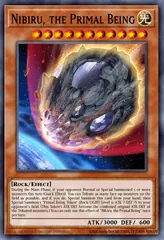 Nibiru, the Primal Being Nibiru, the Primal Being |
During the Main Phase, after your opponent has summoned 5 or more monsters that turn: Tribute as many face-up monsters on the field as possible, then summon Nibiru and give your opponent a token. |
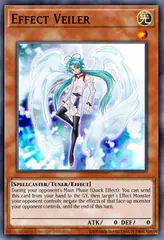 Effect Veiler Effect Veiler |
During your opponent’s Main Phase: send it to the GY to negate one of their face-up Effect Monsters’ effects until the end of the turn. |
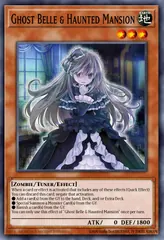 Ghost Belle & Haunted Mansion Ghost Belle & Haunted Mansion |
Discard it to negate an activation that would add a card from the GY, Special Summon from the GY, or banish from the GY. Once per turn. |
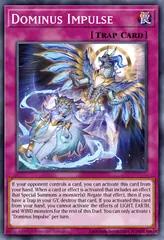 Dominus Impulse Dominus Impulse |
A Trap you can activate from your hand if your opponent controls a card: negate an effect that Special Summons. Activating it from the hand stops you using LIGHT, EARTH and WIND monster effects for the rest of the duel. |
Full rulings and tips are on each card’s page.
Choosing your hand traps
Each hand trap answers a different kind of play, so read your opponent’s likely deck against the card text:
- Decks that search a lot are weak to cards that stop Deck-to-hand effects (Ash Blossom, Droll & Lock Bird).
- Decks that summon a lot are weak to cards that stop or punish Special Summons (Dominus Impulse, Mulcharmy Fuwalos, Nibiru).
- Decks built around one key monster effect are weak to negation (Effect Veiler, Infinite Impermanence, Ghost Ogre).
- Graveyard decks are weak to Ghost Belle & Haunted Mansion.
Watch the conditions too. Mulcharmy cards need you to control no cards, Effect Veiler only works during your opponent’s Main Phase, and Infinite Impermanence only works from the hand while you control no cards.
Playing around them
Your opponent has hand traps too. Two habits help:
- Lead with the play you can afford to lose. If a hand trap stops your first effect, you want the important one still coming.
- Know the answers. Cards like Called by the Grave banish a monster from your opponent’s GY and negate the effects of monsters with the same name until the end of the next turn, which can shut off a hand trap after it’s used.
Next: the damage step.